Latest OGEA-103 Study Guide - Reliable OGEA-103 Learning Materials
Wiki Article
DOWNLOAD the newest TrainingQuiz OGEA-103 PDF dumps from Cloud Storage for free: https://drive.google.com/open?id=1cCEnzwfNHXAb7CWP__Uzf9Pl1CV8bBdj
The The Open Group OGEA-103 PDF dumps file is the most convenient way to prepare for the examination. This document is a collection of most probable and realistic TOGAF Enterprise Architecture Combined Part 1 and Part 2 Exam OGEA-103 dumps. With this PDF file, you have TOGAF Enterprise Architecture Combined Part 1 and Part 2 Exam OGEA-103 questions that will appear in the real exam. You can immediately download our OGEA-103 PDF Questions from the TrainingQuiz website after payment. Without place and time limits, you can use the PDF format of TOGAF Enterprise Architecture Combined Part 1 and Part 2 Exam OGEA-103 real exam questions via smartphones, tablets, and laptops.
The Open Group is a global consortium that aims to promote open standards and best practices in information technology. One of its flagship programs is the TOGAF Enterprise Architecture Certification, which is recognized worldwide as a benchmark for enterprise architects. The OGEA-103 exam is the latest offering from The Open Group, which combines the Part 1 and Part 2 exams of the TOGAF certification. OGEA-103 exam is designed for professionals who want to demonstrate their knowledge and skills in enterprise architecture and gain recognition for their expertise.
The Open Group OGEA-103: TOGAF Enterprise Architecture Combined Part 1 and Part 2 exam is a comprehensive assessment of an individual's knowledge and understanding of the TOGAF framework. It is an essential certification for individuals seeking to advance their careers in enterprise architecture and is recognized globally. OGEA-103 Exam covers a range of topics, including the TOGAF Architecture Development Method (ADM), architecture content framework, enterprise continuum, architecture capability framework, stakeholder management, and architecture governance.
>> Latest OGEA-103 Study Guide <<
The Open Group Latest OGEA-103 Study Guide: TOGAF Enterprise Architecture Combined Part 1 and Part 2 Exam - TrainingQuiz Help you Pass Once
OGEA-103 Guide Torrent compiled by our company is definitely will be the most sensible choice for you. In this website, you can find three different versions of our OGEA-103 guide torrent which are prepared in order to cater to the different tastes of different people from different countries in the world since we are selling our TOGAF Enterprise Architecture Combined Part 1 and Part 2 Exam test torrent in the international market. Most notably, the simulation test is available in our software version. With the simulation test, all of our customers will have an access to get accustomed to the TOGAF Enterprise Architecture Combined Part 1 and Part 2 Exam exam atmosphere and get over all of bad habits which may influence your performance in the real TOGAF Enterprise Architecture Combined Part 1 and Part 2 Exam exam.
The Open Group TOGAF Enterprise Architecture Combined Part 1 and Part 2 Exam Sample Questions (Q72-Q77):
NEW QUESTION # 72
Exhibit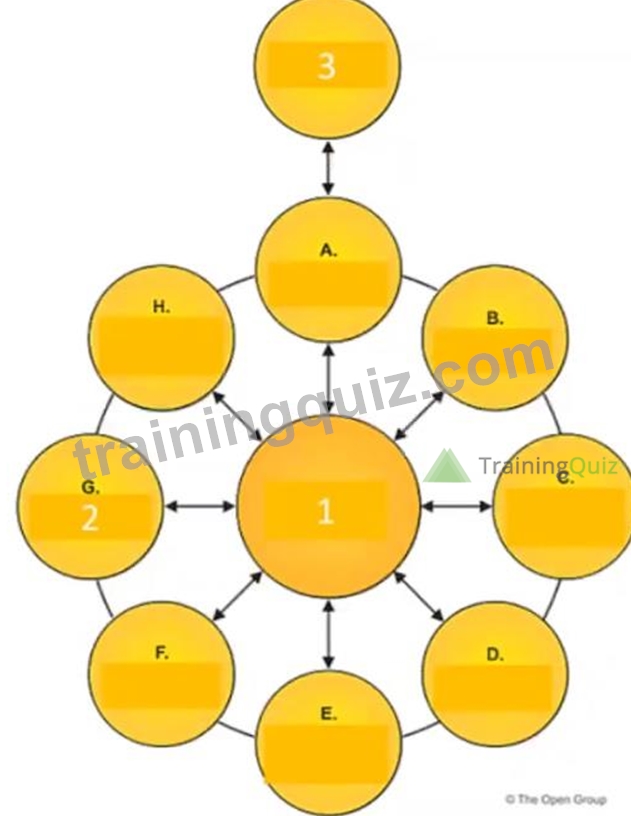
Consider the illustration showing an architecture development cycle Which description matches the phase of the ADM labeled as item 2?
- A. Provides architectural oversight for the implementation
- B. Conducts implementation planning for the architecture defined in previous phases
- C. Establishes procedures for managing change to the new architecture
- D. Operates the process of managing architecture requirements
Answer: A
Explanation:
Based on the illustration, the phase of the ADM labeled as item 2 is the Implementation Governance phase. This phase provides architectural oversight for the implementation. It ensures that the implementation project conforms to the architecture. It also provides a framework for monitoring and managing the implementation.
The Implementation Governance phase involves the following activities:
Finalizing the Architecture Roadmap and the supporting Implementation and Migration Plan Assigning an Architecture Board to oversee the implementation Establishing Architecture Contracts with the implementation partners Reviewing and approving the implementation project plans and deliverables Performing Architecture Compliance reviews to ensure alignment with the architecture Performing Architecture Audit reviews to ensure quality and performance of the architecture Resolving any architecture issues or change requests that arise during the implementation Maintaining the architecture lifecycle and ensuring its continuity The Implementation Governance phase is essential for ensuring that the architecture is realized as intended and that it delivers the expected business value and outcomes.
NEW QUESTION # 73
You are working as an Enterprise Architect within the Enterprise Architecture (EA) team at a healthcare and life sciences company. The EA team is developing a secure system for researchers to share clinical trial information easily across the organization and with external partners.
Due to the highly sensitive nature of the information, each architecture domain must consider privacy and safety concerns. The healthcare division has been directed to minimize disruptions to clinical trials while introducing the new system gradually.
How would you identify the work packages for introducing the new system? Based on the TOGAF standard, which of the following is the best answer?
- A. Identify Solution Building Blocks for development or procurement, then use a CRUD matrix to rank and select the most cost-effective work packages. Schedule the rollout sequentially across regions.
- B. Draw up an Implementation Factor Catalog to indicate actions and constraints. Use a Consolidated Gaps, Solutions, and Dependencies Matrix, then group similar activities into work packages and identify dependencies.
- C. Use a Consolidated Gaps, Solutions, and Dependencies Matrix to create work packages and sequence them into Capability Increments. Document in a Transition Architecture State Evolution Table.
- D. Use a Consolidated Gaps, Solutions, and Dependencies Matrix to classify each solution, group them into work packages, then regroup into Capability Increments. Document in an Architecture Definition Increments Table.
Answer: D
Explanation:
In the TOGAF framework, understanding and addressing stakeholder concerns is crucial, particularly for complex projects with high stakes like the AI-first initiative described in the scenario. This approach aligns well with TOGAF's ADM (Architecture Development Method) and its emphasis on effective stakeholder management and risk assessment. Here's why this is the best course of action:
* Stakeholder Analysis and Documentation:Conducting a stakeholder analysis is foundational in the early stages of any TOGAF project, particularly during the Preliminary and Architecture Vision phases.
This process involves identifying the different stakeholders, understanding their positions, documenting their concerns, and considering any cultural factors that might influence their perspective on the AI-first initiative. Given the diverse concerns raised (such as job security, skill requirements, and cybersecurity), it's essential to have a clear understanding of each stakeholder group's priorities and fears.
* Recording Concerns in the Architecture Vision Document:The Architecture Vision phase in TOGAF focuses on defining the high-level scope and objectives of the architecture project. By documenting stakeholder concerns and the corresponding views in the Architecture Vision document, the EA team ensures that these concerns are transparently acknowledged and addressed as part of the strategic direction. This step not only aligns with TOGAF best practices but also helps in building stakeholder buy-in and trust.
* Architecture Requirements Specification and Risk Management:Risk management is a key aspect of TOGAF's ADM, particularly in the Requirements Management and Implementation Governance phases. Documenting the requirements for addressing specific risks in the Architecture Requirements Specification provides a structured way to ensure that identified risks are acknowledged and managed throughout the transformation. Regular assessments and feedback loops ensure ongoing alignment and adaptability to emerging risks, which is particularly important given the dynamic nature of AI and its associated challenges.
* Alignment with TOGAF ADM Phases:This approach follows the prescribed flow of TOGAF's ADM, starting with stakeholder engagement in the Preliminary and Architecture Vision phases and progressing to risk assessment in the Requirements Management phase. By maintaining a focus on stakeholder needs and formalizing these into architecture requirements, the EA team can ensure that the architecture not only meets business objectives but also mitigates stakeholder concerns.
* TOGAF Reference on Stakeholder Management Techniques:TOGAF places significant emphasis on managing stakeholder concerns through its stakeholder management techniques, which highlight the need to systematically identify, analyze, and address the concerns of all involved parties. This practice helps ensure that the architecture is viable and accepted across the organization.
By conducting a thorough stakeholder analysis and integrating the findings into both the Architecture Vision and the Architecture Requirements Specification, the EA team can proactively address stakeholder concerns, manage risks, and align the AI-first initiative with the agency's strategic objectives. This approach is consistent with TOGAF's guidance and provides a structured framework for addressing both business and technical challenges in the context of an AI-first transformation.
NEW QUESTION # 74
Consider the following ADM phases objectives.
Objective:
1. Develop the Target Data Architecture that enables the Business Architecture and the Architecture Vision
2. Develop the Target Business Architecture that describes how the enterprise needs to operate to achieve the business goals
3. Develop a high-level aspirational vision of the capabilities and business value to be delivered as a result of the proposed Enterprise Architecture
4. Identify candidate Architecture Roadmap components based upon gaps between the Baseline and Target Technology Architectures Which phase does each objective match?
- A. 1A-2B-3C-4D
- B. 1B-2D-3A-4C
- C. 1C-2B-3A-4D
- D. 1C-2D-3B-4A
Answer: C
Explanation:
* Phase A: Architecture Vision
o Develop a high-level aspirational vision of the capabilities and business value to be delivered as a result of the proposed Enterprise Architecture o Define the scope and boundaries of the architecture engagement o Identify the key stakeholders and their concerns and expectations o Define the Architecture Vision statement and the Architecture Definition Document o Obtain approval and commitment from the sponsors and stakeholders
* Phase B: Business Architecture
o Develop the Target Business Architecture that describes how the enterprise needs to operate to achieve the business goals o Define the Baseline Business Architecture, if not available o Perform a gap analysis between the Baseline and Target Business Architectures o Define candidate roadmap components for the Business Architecture o Resolve impacts across the Architecture Landscape
* Phase C: Information Systems Architecture
o Develop the Target Data Architecture that enables the Business Architecture and the Architecture Vision o Develop the Target Application Architecture that supports the Business Architecture and the Architecture Vision o Define the Baseline Data and Application Architectures, if not available o Perform a gap analysis between the Baseline and Target Data and Application Architectures o Define candidate roadmap components for the Information Systems Architecture o Resolve impacts across the Architecture Landscape
* Phase D: Technology Architecture
o Develop the Target Technology Architecture that enables the Information Systems Architecture and the Architecture Vision o Define the Baseline Technology Architecture, if not available o Perform a gap analysis between the Baseline and Target Technology Architectures o Identify candidate Architecture Roadmap components based upon gaps between the Baseline and Target Technology Architectures o Resolve impacts across the Architecture Landscape Therefore, the correct matching of the objectives and the phases is:
* 1C: Develop the Target Data Architecture that enables the Business Architecture and the Architecture Vision
* 2B: Develop the Target Business Architecture that describes how the enterprise needs to operate to achieve the business goals
* 3A: Develop a high-level aspirational vision of the capabilities and business value to be delivered as a result of the proposed Enterprise Architecture
* 4D: Identify candidate Architecture Roadmap components based upon gaps between the Baseline and Target Technology Architectures
NEW QUESTION # 75
Scenario
You are working as an Enterprise Architect within an Enterprise Architecture (EA) team at a global company that sells consumer products. The company produces many products that buyers use and enjoy.
The company has announced a major change to its products that will occur over a four-year period. This change includes the introduction of digital products and services. An architecture to support this strategy has been finished, along with a roadmap for a set of projects to implement this significant change. This will be a cross-functional effort between the product design and software teams. It is planned to be developed in phases.
The company faces a challenge in presenting and providing access to different services through its products and digital platforms while ensuring compliance with data privacy laws. In some countries and regions, the data residency requirements mean that the company has to store certain data within the region where it is collected. As a result, the company's application portfolio and infrastructure must connect with various cloud services and data repositories in different countries.
The EA team has inherited the architecture used by the current products, some of which can be carried over to the new products. The EA team has started to define which parts of the architecture to carry forward. Enough of the Business Architecture has been defined so that work can commence on the Information Systems and Technology Architectures. Those architectures need to be defined to support the key digital services that the company plans to provide.
The company uses the TOGAF Standard as the foundation for its Enterprise Architecture framework, and architecture development follows the purpose-based EA Capability model outlined in the TOGAF Series Guide: A Practitioner's Approach to Developing Enterprise Architecture Following the TOGAF ADM. The EA team reports to the Chief Information Officer (CIO), who oversees the program.
You have been asked how to decide and organize the work to deliver the requested architectures.
Based on the TOGAF standard, which of the following is the best answer?
- A. You research leading data companies, using your findings to help in developing high-level Target Data, Application, and Technology Architectures. You review the Architecture Vision to determine the level of detail, time, and scope of the ADM cycle phases required for each project. You identify and estimate the cost of the main resources. You then prepare an Architecture Roadmap and request the Architecture Board to review the roadmap. You then start the project.
- B. You refer to the superior architecture for guidance. You review the projects identified, their dependencies, and synergies, then decide the sequence for starting the projects. You develop high-level architecture descriptions. For each project, you determine how much work is needed, identify reference architectures, and candidate building blocks. You identify the resource needs taking into account cost and value. You document the different options, risks, and ways to control them to enable feasibility analysis and trade-off with the stakeholders.
- C. You commence an iteration of ADM Phase A, identifying the stakeholders and revising the Architecture Vision. You perform a Stakeholder Analysis and update the Stakeholder Map. You conduct workshops and interviews to reflect the stakeholders who are now the key drivers for the digital products and services. You coordinate with the CIO to ensure alignment with the overall roadmap and update the Implementation and Migration Plan accordingly.
- D. You look outside the company to study how other companies organize their data models and application portfolios. You create just enough architecture description for the Application, Data, and Technology Architectures to identify the different options. For each project, this includes identification of candidate architecture and solution building blocks. You then identify solution providers, perform a readiness assessment, and assess the viability and fitness of the solution options. You then write the draft Implementation and Migration plan.
Answer: B
Explanation:
Comprehensive and Detailed Step-by-Step Explanation
Context of the Scenario
The company is in the process of delivering requested architectures to support the introduction of digital products and services. The Business Architecture is sufficiently defined, and the focus is on developing the Information Systems and Technology Architectures.
TOGAF emphasizes breaking down large, complex transformation programs into manageable projects, focusing on dependencies, risks, trade-offs, and sequencing of efforts. Based on the scenario, the company must deal with:
Data privacy and residency compliance across different regions.
Re-use of existing architecture for efficiency.
Alignment of digital services with a global roadmap.
The activity described aligns with ADM Phases B (Business Architecture), C (Information Systems Architecture), and D (Technology Architecture), with a focus on delivering architectures for implementation.
Option Analysis
Option A:
Strengths:
Refers to developing high-level architecture descriptions and identifying reference architectures and candidate building blocks, which align with ADM Phases B, C, and D.
Addresses feasibility analysis, trade-offs, and stakeholder engagement, which are part of architecture development and decision-making in TOGAF.
Ensures that the architecture descriptions are resource-conscious, including cost and value analysis, dependencies, risks, and synergies between projects.
Conclusion: Correct, as it provides a complete approach to organizing the work to deliver architectures while adhering to TOGAF principles.
Option B:
Strengths:
Suggests creating architecture descriptions for the Application, Data, and Technology Architectures, which are necessary for delivering requested architectures.
Addresses readiness assessments and the fitness of solutions.
Weaknesses:
Emphasizes looking outside the company and studying other companies' models, which is not necessarily aligned with TOGAF unless justified by specific gaps.
Skips essential TOGAF steps like feasibility analysis and detailed stakeholder engagement.
Conclusion: Incorrect, as it places undue emphasis on external research instead of leveraging TOGAF's structured ADM.
Option C:
Strengths:
Suggests reviewing the Architecture Vision and determining scope, which aligns with TOGAF principles.
Proposes preparing an Architecture Roadmap and involving the Architecture Board for review.
Weaknesses:
Does not cover important elements such as candidate building blocks, feasibility analysis, or stakeholder engagement.
Suggests starting the project prematurely without proper sequencing or risk trade-offs.
Conclusion: Incorrect, as it skips key steps and lacks a structured approach to dependencies and resource management.
Option D:
Strengths:
Suggests revising the Architecture Vision and conducting a Stakeholder Analysis, which aligns with Phase A of the ADM.
Weaknesses:
Returning to Phase A is not required here, as the Architecture Vision has already been defined. Revising the vision at this stage indicates a step backward.
Lacks focus on feasibility analysis, dependencies, and sequencing, which are the immediate needs in this phase.
Conclusion: Incorrect, as it unnecessarily revisits earlier ADM phases instead of progressing.
TOGAF
Reference
ADM Phases B, C, D: Emphasizes developing detailed architectures, identifying candidate building blocks, and addressing dependencies, risks, and resource needs (TOGAF 9.2, Chapters 8-10).
Architecture Roadmap and Feasibility Analysis: Guides sequencing and trade-offs for implementation (TOGAF 9.2, Section 12.4).
Stakeholder Engagement: Critical for ensuring alignment and feasibility (TOGAF 9.2, Section 24.2).
Decision-Making and Trade-offs: TOGAF emphasizes documenting risks and trade-offs as part of feasibility analysis (TOGAF 9.2, Section 6.4.1).
NEW QUESTION # 76
Which of the following describes the practice by which the enterprise architecture is managed and controlled at an enterprise-wide level?
- A. IT governance
- B. Technology governance
- C. Architecture governance
- D. Corporate governance
Answer: C
Explanation:
According to the TOGAF Standard, 10th Edition, architecture governance is "the practice by which enterprise architectures and other architectures are managed and controlled at an enterprise-wide level" 1. Architecture governance ensures that the architecture development and implementation are aligned with the strategic objectives, principles, standards, and requirements of the enterprise, and that they deliver the expected value and outcomes. Architecture governance also involves establishing and maintaining the architecture framework, repository, board, contracts, and compliance reviews 1. The other options are not correct, as they are not the term used by the TOGAF Standard to describe the practice by which the enterprise architecture is managed and controlled at an enterprise-wide level. Corporate governance is "the system by which an organization is directed and controlled" 2, and it covers aspects such as leadership, strategy, performance, accountability, and ethics. IT governance is "the system by which the current and future use of IT is directed and controlled" 2, and it covers aspects such as IT strategy, policies, standards, and services. Technology governance is "the system by which the technology decisions and investments are directed and controlled" 3, and it covers aspects such as technology selection, acquisition, deployment, and maintenance. References: 1:
TOGAF Standard, 10th Edition, Part VI: Architecture Governance, Chapter 44: Introduction. 2: TOGAF Standard, 10th Edition, Part I: Introduction, Chapter 3: Definitions. 3: TOGAF Series Guide: Using the TOGAF Framework to Define and Govern Service-Oriented Architectures, Part II: Using the TOGAF Framework to Define and Govern Service-Oriented Architectures, Chapter 5: Technology Governance.
NEW QUESTION # 77
......
The versions of our OGEA-103 study guide includes the PDF version, PC version, APP online version. Each version's using method and functions are different and the client can choose the most convenient version to learn our OGEA-103 exam materials. For example, the PDF version is convenient for you to download and print our OGEA-103 Test Questions and is suitable for browsing learning. If you use the PDF version you can print our OGEA-103 test torrent on the papers and it is convenient for you to take notes. You can learn our OGEA-103 test questions at any time and place.
Reliable OGEA-103 Learning Materials: https://www.trainingquiz.com/OGEA-103-practice-quiz.html
- 2026 Latest OGEA-103 Study Guide: TOGAF Enterprise Architecture Combined Part 1 and Part 2 Exam – Realistic Reliable OGEA-103 Learning Materials ???? Immediately open ➥ www.prepawayete.com ???? and search for 《 OGEA-103 》 to obtain a free download ????Latest OGEA-103 Guide Files
- Latest OGEA-103 Guide Files ???? OGEA-103 Latest Exam Price ⬛ OGEA-103 Reliable Dump ???? Copy URL ⇛ www.pdfvce.com ⇚ open and search for ▛ OGEA-103 ▟ to download for free ????Test OGEA-103 Dates
- OGEA-103 exam dumps, prep4sure OGEA-103 real test, The Open Group OGEA-103 prep ???? Download ✔ OGEA-103 ️✔️ for free by simply searching on ✔ www.exam4labs.com ️✔️ ????OGEA-103 Latest Exam Price
- Quiz 2026 OGEA-103: TOGAF Enterprise Architecture Combined Part 1 and Part 2 Exam Authoritative Latest Study Guide ???? Copy URL ▶ www.pdfvce.com ◀ open and search for ☀ OGEA-103 ️☀️ to download for free ????OGEA-103 Valuable Feedback
- Quiz 2026 OGEA-103: TOGAF Enterprise Architecture Combined Part 1 and Part 2 Exam Authoritative Latest Study Guide ???? ▛ www.torrentvce.com ▟ is best website to obtain [ OGEA-103 ] for free download ????New OGEA-103 Test Tutorial
- OGEA-103 Exams Training ???? Valid OGEA-103 Exam Duration ???? Guaranteed OGEA-103 Passing ???? Search for ⇛ OGEA-103 ⇚ and easily obtain a free download on ▷ www.pdfvce.com ◁ ????OGEA-103 Certification Training
- OGEA-103 Valuable Feedback ???? OGEA-103 Latest Study Notes ???? OGEA-103 Exam Review ???? Open [ www.prep4away.com ] and search for ▶ OGEA-103 ◀ to download exam materials for free ????New OGEA-103 Test Tutorial
- New OGEA-103 Test Tips ???? Valid OGEA-103 Exam Questions ???? Valid OGEA-103 Exam Online ???? Search for ▶ OGEA-103 ◀ and download it for free on “ www.pdfvce.com ” website ????OGEA-103 Latest Study Notes
- Latest OGEA-103 Guide Files ???? OGEA-103 Certification Training ???? OGEA-103 Exam Review ???? Open website ➠ www.prepawaypdf.com ???? and search for ▛ OGEA-103 ▟ for free download ????Latest OGEA-103 Mock Test
- 2026 The Open Group OGEA-103 –The Best Latest Study Guide ???? Open website ( www.pdfvce.com ) and search for { OGEA-103 } for free download ????OGEA-103 Exam Review
- Free PDF Quiz The Open Group - Marvelous OGEA-103 - Latest TOGAF Enterprise Architecture Combined Part 1 and Part 2 Exam Study Guide ???? Immediately open ⏩ www.prepawaypdf.com ⏪ and search for ⮆ OGEA-103 ⮄ to obtain a free download ????OGEA-103 Certification Training
- www.stes.tyc.edu.tw, marvinywlm101764.bloggerswise.com, regangzre378954.blog2news.com, www.stes.tyc.edu.tw, antoniyzi505357.dgbloggers.com, delilahzcaq138564.blogoxo.com, ticketsbookmarks.com, singnalsocial.com, bookmarkcitizen.com, andrewucnj915751.wikigiogio.com, Disposable vapes
P.S. Free & New OGEA-103 dumps are available on Google Drive shared by TrainingQuiz: https://drive.google.com/open?id=1cCEnzwfNHXAb7CWP__Uzf9Pl1CV8bBdj
Report this wiki page